Midwife of the Week: Constance Rock

Now practicing in rural Northern California, Constance Rock is responsible for opening and directing two much-needed birth centers in Los Angeles. She came to home birth midwifery with the desire to provide to others what she felt was missing from the hospital birth of her first child. Her practice has since evolved to include public speaking, original educational videos, and activism. She has trained midwives, doulas, and childbirth educators across the globe for over two decades. Constance is president of the California Association of Midwives (CAM), a group that works on legislation to support and promote midwifery. In January 2014, Constance and CAM saw their efforts come to fruition with the elimination of a law requiring physician oversight of home births. Before that point, most licensed California midwives were practicing in violation of the law, since physicians were generally unwilling to enter into the formal relationship it necessitated. Not only does this change allow midwives to conform to state law, but by doing so, it permits Medi-Cal reimbursement of midwifery services, thus opening up home birth to those previously unable to afford it.

Midwife of the Week posts, written by Sirene-Rose Lipschutz, originate on FoMM’s Facebook page and are archived here on our website for your continued enjoyment!

Midwife of the Week: Aviva Romm

Aviva Romm’s professional story begins: “Midwife. MD. Herbalist. Ecologist. Activist. Mom.” A Yale educated MD, Aviva has turned these identities, skills, and backgrounds into woman-centered, socially and environmentally conscious, holistic care. Aviva practices what she calls “good medicine,” and hopes to see a shift away from over-medicalization toward a model that “respects the intrinsic healing capacities of the body and nature.” She has written seven highly renowned health and pregnancy books, is the founder of Yale’s Integrative Medicine Program, and the creator of Woman Wise, an online curriculum for women from all walks of life. Here is an article about why Aviva would still choose a home birth even after all her years as an MD: http://avivaromm.com/choosing-home-birth.

Midwife of the Week posts, written by Sirene-Rose Lipschutz, originate on FoMM’s Facebook page and are archived here on our website for your continued enjoyment!
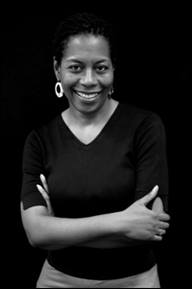
Midwife of the Week: Geradine Simkins

Michigan’s Geradine Simkins, DEM, CNM, MSN didn’t expect midwifery to be her “real job,” just part of the movement to take back birth. Self-taught in midwifery in 1976, she subsequently worked as a certified direct-entry midwife (DEM) for 20 years. In the 1990’s she became a Certified Nurse Midwife (CNM) with an accompanying Master of Science in Nursing degree. Throughout her career she pursued her calling to move midwifery forward in the United States. She undertook leadership roles on the Board of Directors of the Midwife Alliance of North America for more than 15 years, including two terms as President and, more recently, as MANA’s first Executive Director.
Her book, Into These Hands, Wisdom from Midwives, is an anthology featuring the life stories of 25 remarkable women who have dedicated their lives and careers to the path of social change through midwifery. Though she retired from her action-packed career this spring in order to enter a period of rest and renewal, her legacy inspires us to continue the movement here in Michigan towards licensure. Hear her speak here about a window of opportunity in the United States maternity system.

Midwife of the Week posts originate on FoMM’s Facebook page and are archived here on our website for your continued enjoyment! This week’s post was written by Dawn Millar.
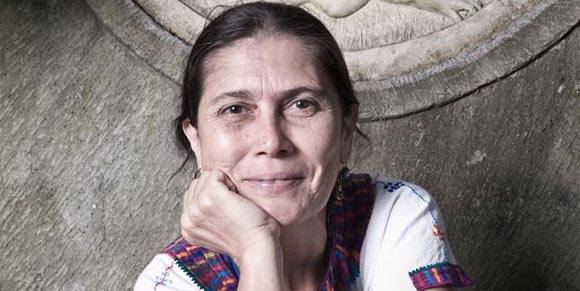
Midwife of the Week: Jennie Joseph

British trained midwife Jennie Joseph used her skill and years of experience to develop the J.J. Way, a “high-touch, low-tech” approach to maternity care aimed at eliminating race and class disparities, and improving experiences and outcomes for at-risk mothers and babies. Jennie runs the Birth Place, a birthing center in central Florida based on this practice model, where no woman is turned away due to inability to pay. She is also the founder of Commonsense Childbirth Inc., an organization that builds on the success of the Birth Place by offering community outreach, training for lactation consultants, childbirth educators, and doulas, and a licensed, three-year program for direct entry midwives. For more info about the JJ Way, and lots of statistics, follow the link: http://www.amchp.org/programsandtopics/BestPractices/InnovationStation/ISDocs/JJ-way.pdf.

Midwife of the Week posts, written by Sirene-Rose Lipschutz, originate on FoMM’s Facebook page and are archived here on our website for your continued enjoyment!
Midwife of the Week: Robin Lim

Raised in the US and the Philippines, Robin Lim (or Ibu Robin – Mother Robin) and her family moved to Bali, Indonesia, to open the Bumi Sehat community health and childbirth clinic. Over the following years, what started as one clinic became the Yayasan Bumi Sehat, or Healthy Mother Earth Foundation, a network of free clinics throughout Indonesia and beyond. The clinics not only provide maternal and infant care, but train midwives and other caregivers to do so with limited resources. For example, midwives are taught to burn umbilical cords to prevent the use of scissors or knives when sterile implements are not available. This flexibility makes it easy for Bumi Sehat to travel to impoverished or post-catastrophe countries. Bumi Sehat provides services with respect for each country’s cultures and traditions. In 2011, CNN named Robin its Hero of the Year. Robin is also the author of numerous articles and books, including The Geometry of Splitting Souls, Stretch Marks, and As a Child in the Religion of Gratitude, three books of poetry that offer a beautiful look into the life of the woman and her work. This is a great page about all things Robin: http://robinlimsupport.org/.

Midwife of the Week posts, written by Sirene-Rose Lipschutz, originate on FoMM’s Facebook page and are archived here on our website for your continued enjoyment

Midwife of the Week: Martha Ballard

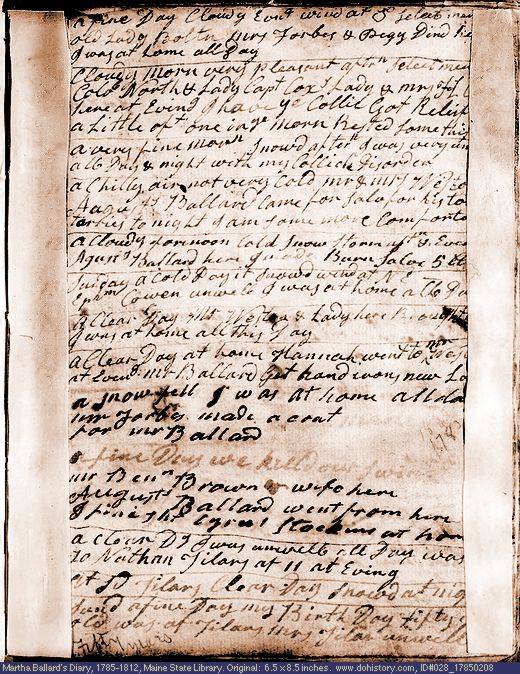
Born in Massachusetts in 1734, Martha Ballard practiced midwifery just as the first thirteen states were being formed. In her many years as a midwife, Martha delivered close to 1,000 babies in what is now Maine. One of few literate women at the time, Martha kept a terse but concise journal for 27 years, covering her daily life, midwifery practice, and goings on about town – nearly 10,000 entries. The journal reveals a woman who manages her work and family during times of disease, loss, trauma, and political upheaval. During Martha’s lifetime, hospitals were coming into existence, male doctors began attending births, and midwifery began to decline as it was assumed that women were incapable of learning and applying the new obstetrical practices.

In 1991, believing Martha’s journal provided a unique and important historical perspective, historian Laurel Thatcher Ulrich published A Midwife’s Tale, winner of that year’s Pulitzer Prize, based on the journal. This website is dedicated to Martha Ballard’s life and journal: http://dohistory.org/martha/.

Midwife of the Week posts, written by Sirene-Rose Lipschutz, originate on FoMM’s Facebook page and are archived here on our website for your continued enjoyment!
Midwife of the Week: Midwives for Haiti

Though the organization began only seven years ago, Midwives for Haiti (or Sage Femmes pou Ayiti – Wise Women for Haiti in Kreyol) comprises nearly one-third of the care providers for pregnant women in Haiti. With help from international visiting midwives, the organization offers a 12-month Skilled Birth Attendant training for Haitian nurses. Graduates of these trainings have attended over 12,000 births. Midwives for Haiti also recognizes the significance of the hundreds of Matrons, or traditional birth attendants, who typically provide care and labor support. The organization aims to support their crucial role by providing clean delivery kits and in-depth training so that Matrons can recognize red flags, increase safe deliveries, and make referrals when necessary. Services are provided in a maternity center located in Hinche, a city 115 km northeast of Port-au-prince, as well as through the Mobile Prenatal Clinic, which travels through 20 rural villages providing clinical services and education. See their website at https://midwivesforhaiti.org/our-work.html.

Midwife of the Week posts, written by Sirene-Rose Lipschutz, originate on FoMM’s Facebook page and are archived here on our website for your continued enjoyment!
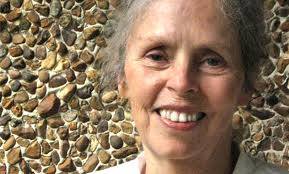
Midwife of the Week: Ina May Gaskin

ina may gaskinA name ubiquitous both inside and outside the birthing world, Ina May Gaskin has been referred to as “the mother of authentic midwifery.” In 1971, Ina May and her husband opened The Farm in Tennessee, which houses one of the first and largest birthing centers in the United States. The Farm is known for its incredibly high number of natural births including twin and breech, and its low hospital transfer rate. Gaskin introduced to the U.S. a traditional Guatemalan technique to resolve shoulder dystocia, the entrapment of a baby’s shoulder behind the mother’s pubic bone. The technique of having the mother position herself on hands and knees to open the pelvic outlet has since been dubbed the “Gaskin Maneuver” and is now a standard strategy for midwives and many obstetricians. The Farm’s popularity has only increased over the past decades; it offers trainings and CEUs including midwife and doula, water shiatsu, and an herb workshop. Ina May has written several books, among them the seminal works Spiritual Midwifery and Ina May’s Guide to Childbirth, which have helped begin to demystify and normalize natural/home birth. If you haven’t seen her TED Talk, watch it here: http://inamay.com/.

Midwife of the Week posts, written by Sirene-Rose Lipschutz, originate on FoMM’s Facebook page and are archived here on our website for your continued enjoyment!
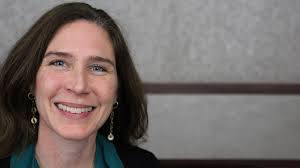
Midwife of the Week: Melissa Cheyney

melissa cheyneyDr. Melissa Cheyney began her journey to midwifery as a graduate student in anthropology. She focused on bioarchaeology – a cultural-historical approach, which uses human remains to understand health conditions of the past. As she moved on to PhD work, her interests shifted, not only to the living, but to birth itself. She currently teaches medical anthropology and reproductive biology at the University of Oregon and attends births as a Licensed Direct-Entry midwife. Melissa is an advocate for better communication and working relationships between midwives and the medical community. She believes that midwives “hold the key to to national health care reforms that can begin to reverse current trends toward increasing costs and declining outcomes.” She chairs the Oregon Governor’s board of Direct-Entry Midwifery, is the Vice President of Doulas Supporting Teens, and a member of the Coordinating Committee for MANA’s Division of Research. Here’s Melissa’s Huff Post article about home births: http://www.huffingtonpost.com/melissa-cheyney/post_812_b_709215.html.

Midwife of the Week posts, written by Sirene-Rose Lipschutz, originate on FoMM’s Facebook page and are archived here on our website for your continued enjoyment!
Midwife of the Week: Brynne Potter

When she was just 20 years old, Brynne Potter began attending births as an apprentice with the philosophy that “if we can start babies off right, maybe they won’t have so much healing to do.” Since then, Brynne has participated in a wide range of midwifery related pursuits. She is a true friend to the cause and served as the Legislative Coordinator to the Commonwealth Midwives Alliance whose aim it was to pass a bill allowing licensure in Virginia. The bill passed in late 2005. After seeing her lobbying work in Virginia, the North American Registry of Midwives (NARM) recruited her to sit on their board and share her knowledge and experience with other states seeking licensure. Brynne has made great innovations in the business side of midwifery as well. She designed the electronic charting software, Private Practice, which provides an easy to use database for recording all aspects of client care. Brynne Potter’s excellent video series on shared decision making can be found here: http://narm.org/shareddecisionmaking/.

Midwife of the Week posts, written by Sirene-Rose Lipschutz, originate on FoMM’s Facebook page and are archived here on our website for your continued enjoyment!